


Conducting clinical trials requires more than just researchers. Support staff handle regulations, applications, and documents. They also contribute to good communication in the studies.
In the picture you see Camilla Skancke Mørstad. She is the research coordinator at the REMEDY research center at Diakonhjemmet Hospital. She helps ensure that clinical studies run exactly as they should – for the benefit of patients. (Photo: Nicolas Tourrenc / Diakonhjemmet Hospital)
“I facilitate collaboration between different parties,” says Camilla Skancke Mørstad. She is research coordinator at Diakonhjemmet Hospital.
In one of the projects, she helps researchers get the most out of biological medicines.
“Coordinators create good flow. It makes research more efficient,” says Silje Watterdal Syversen. She is a senior researcher at the REMEDY research center at the hospital.
Clinical research as part of treatment
The government has a clear vision that clinical research should be part of patient care. Clinical research means research that is carried out on humans.
“With us, this is already part of everyday life,” says Mørstad.
Treatment studies investigate the effectiveness and safety of different treatments. At Diakonhjemmet Hospital, patients can quickly benefit from research.
– When we see that a treatment works, patients can get it quickly, says Syversen.
Better utilization of medicines
In 2023, Mørstad joined the project, SQUEEZE. In the Norwegian part called RA-DRUM , they are looking at how medicines can be adapted to the individual with arthritis.
“It's about squeezing more out of the medicines we already have,” says Syversen, who is the project manager.
She emphasizes that coordinators are crucial for making large studies with collaboration between many environments work.
They follow up on the studies and collaborate closely with national and international academic communities.
– We make sure that everything goes smoothly, explains coordinator Mørstad.
Careful planning – a key to success
Everything must be ready before a study can start. European and Norwegian authorities must approve the study. This takes time.
Among other things, a protocol must be created that describes how the study will be conducted. It should also state who can participate and what will happen if adverse events occur.
The application for approval is submitted through the European Clinical Trials Information System (CTIS), a common portal for applications and communication in the EU/EEA.
The study sites must follow the approved layout
For RA-DRUM, the team had to ensure that everything was ready before start-up:
Among other things, they have ensured that the clinic is able to follow the protocol for the project. In order for all participants in the study to be able to follow the same setup, they have had dialogue with both the hospitals in Norway and with the international players.
– Everyone involved needs to know what needs to be in place before they start. Progress can stall if all the requirements are not met. My job is to ensure that everything runs smoothly, says Mørstad.
Round trip for national startup
To get everyone involved in the study started, Mørstad and the team are holding meetings at 15 rheumatology departments.
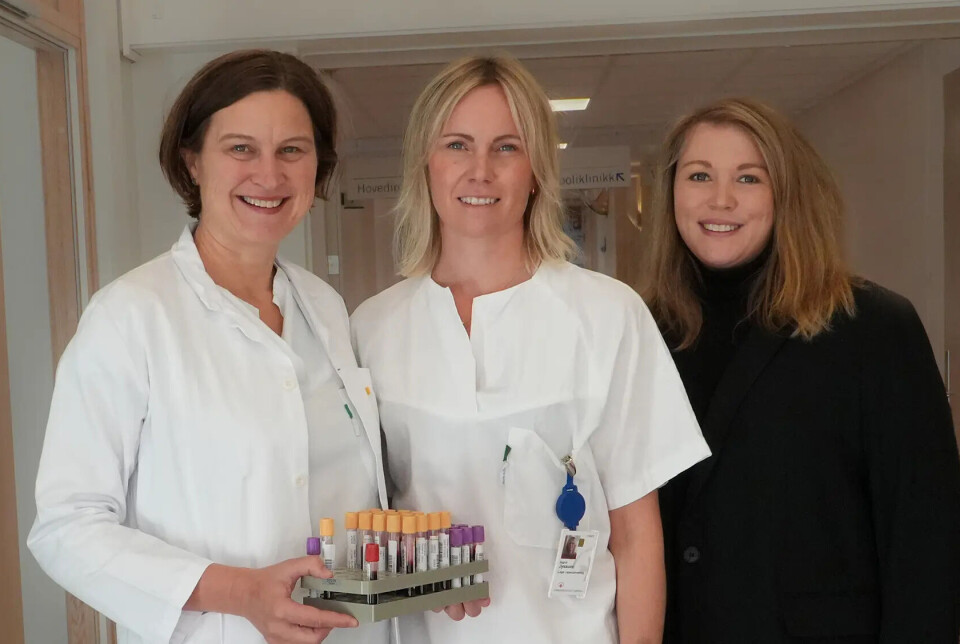
– Some of the researchers involved in the project have been to meetings with me from Kristiansand in the south to Tromsø in the north. It is exciting to see the results of the thorough preparatory work, says Mørstad.
Still a lot of work on the project
The project is now well underway in Norway and Sweden.
– In the future, we will ensure that the rest of the international partners can start the study at their locations. Once all the study centers are up and running, the job will be to follow up on the process of including patients. As coordinator, I also work on quality assurance of the data that is collected, she says.
Mørstad is central to communication with the various centers. She can assist by answering and forwarding questions. She can also follow up on what needs to be done to carry out the study in a good way.
These include, for example, annual reports and applications for any changes to the study.
– Experiences we gain along the way may trigger the need for changes to the study. This requires an application for change to the appropriate authority.
Mørstad points out that when such changes are approved and are to be implemented, it is important that this is communicated well to the various participating hospitals.
– We must ensure that the right personnel receive the information and also receive enough training to be able to implement such changes. As coordinators, you are involved in the study all the way and follow the project from start to finish, Camilla Skancke Mørstad confirms.
The researchers are including patients in the study until December 31, 2027.


